
Description
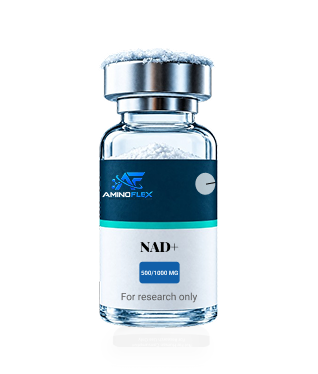
NAD+ 500 mg & 1000 mg
Other Known Titles: NAD+, Nicotinamide Adenine Dinucleotide, β-NAD+, NAD
Compound Type: Dinucleotide coenzyme / endogenous cellular metabolite
Oxidized Form: NAD+
Molecular Formula: C₂₁H₂₇N₇O₁₄P₂
Molecular Weight: 663.4 g/mol
Product Quantities: 500 mg and 1000 mg
Nicotinamide adenine dinucleotide (NAD+) is an essential cellular coenzyme involved in energy metabolism, redox reactions, DNA repair, cellular signaling, and regulation of metabolic pathways. Unlike peptide products, NAD+ is a naturally occurring dinucleotide composed of two nucleotide units connected through phosphate groups. PubChem lists the neutral/zwitterionic form with the molecular formula C₂₁H₂₇N₇O₁₄P₂ and a molecular weight of approximately 663.4 g/mol.
The 500 mg and 1000 mg designations refer to the quantity of NAD+ supplied in each product presentation. They do not represent different chemical forms of the molecule. Depending on manufacturing, analytical testing, hydration state, counterions, or formulation, the measured molecular mass of a supplied NAD+ material can differ from the parent compound value.
Cellular Energy and Metabolic Research
NAD+ is fundamental to cellular energy production because it functions as an electron carrier in numerous oxidation-reduction reactions. It alternates between oxidized NAD+ and reduced NADH forms, allowing cells to transfer reducing equivalents through metabolic pathways involved in glycolysis, the tricarboxylic acid cycle, and mitochondrial oxidative phosphorylation.
This central metabolic role makes NAD+ particularly important in tissues with high energy requirements. Research into NAD+ metabolism therefore encompasses mitochondrial function, glucose utilization, fatty-acid metabolism, cellular respiration, and maintenance of metabolic homeostasis.
Mitochondrial Function
Mitochondria depend heavily on NAD+/NADH cycling to support efficient energy generation. NAD+ availability influences the flow of electrons through metabolic pathways and also affects enzymes involved in mitochondrial regulation.
Research into age-associated NAD+ decline has consequently focused on the relationship between NAD+ availability and mitochondrial dysfunction. Reviews describe reduced NAD+ levels as a potential contributor to impaired mitochondrial function and broader metabolic deterioration during aging.
The connection between NAD+ and mitochondria is also mediated through NAD+-dependent enzymes such as the sirtuins. Several members of the sirtuin family influence mitochondrial activity, metabolic adaptation, and cellular stress responses, making NAD+ availability an important component of mitochondrial signaling.
Sirtuin Signaling
One of the most extensively studied non-redox functions of NAD+ involves the sirtuin family of enzymes. Sirtuins require NAD+ as a co-substrate for their enzymatic activity and participate in processes including protein deacetylation, metabolic regulation, mitochondrial function, and cellular adaptation to stress.
Because sirtuin activity is dependent on NAD+ availability, changes in intracellular NAD+ concentrations can influence several downstream regulatory pathways. This relationship has become a major focus of aging and metabolic research.
Research therefore considers NAD+ not simply as an energy-related molecule but also as a signaling metabolite that connects cellular nutrient status with gene regulation, metabolism, and stress-response pathways.
DNA Repair Research
NAD+ is also required by several enzymes involved in the cellular response to DNA damage. Among the most important are poly(ADP-ribose) polymerases (PARPs), which consume NAD+ while participating in DNA-damage signaling and repair.
When DNA damage increases, PARP activity can increase NAD+ consumption. Research into aging has therefore examined whether the combination of greater NAD+ consumption and reduced NAD+ biosynthesis contributes to age-associated cellular dysfunction.
This relationship makes NAD+ relevant to research involving genomic stability, DNA repair capacity, cellular stress, and age-associated molecular damage.
NAD+ and Aging Research
NAD+ has become a major subject of modern gerontology research because NAD+ concentrations have been reported to decline with age across multiple tissues and experimental organisms. Researchers have proposed that this decline may contribute to changes in mitochondrial function, DNA repair, metabolic regulation, and cellular resilience.
The mechanisms behind age-related NAD+ depletion are complex. Studies have implicated changes in NAD+ biosynthesis together with increased activity of NAD+-consuming enzymes such as PARPs and CD38. This has led to extensive investigation of strategies designed to preserve or restore cellular NAD+ availability.
Importantly, the existence of an age-associated decline in NAD+ does not by itself establish that supplying NAD+ will reverse aging or extend human lifespan. Those questions remain active areas of investigation.
Metabolic Homeostasis
NAD+ participates in numerous metabolic reactions and helps coordinate the relationship between nutrient availability, energy production, and cellular signaling. Its redox function enables cells to maintain appropriate ratios of NAD+ and NADH, while its role as a substrate for signaling enzymes connects metabolism to transcriptional and stress-response pathways.
Research has therefore examined NAD+ biology in relation to glucose metabolism, lipid metabolism, mitochondrial activity, metabolic flexibility, and age-associated metabolic dysfunction. Recent reviews continue to describe NAD+ metabolism as an important regulatory network rather than a pathway limited to energy production alone.
Cellular Stress Response
NAD+ availability can influence how cells respond to metabolic and environmental stress. Through its interaction with sirtuins, PARPs, and other NAD+-dependent enzymes, NAD+ participates in pathways controlling cellular adaptation, DNA repair, mitochondrial maintenance, and inflammatory signaling.
The relationship between NAD+ depletion and cellular stress is particularly important in aging research. Increased oxidative stress and DNA damage can stimulate NAD+-consuming pathways, while declining NAD+ availability may subsequently reduce the capacity of certain repair and maintenance systems.
This feedback relationship has become one of the central concepts in experimental NAD+ biology.
Autophagy and Cellular Maintenance
NAD+ signaling is also connected with autophagy and mitophagy, the cellular processes responsible for removing damaged proteins and organelles. Research has linked NAD+ availability to sirtuin-dependent regulation of autophagic pathways, including mechanisms involved in mitochondrial quality control.
Experimental literature suggests that reduced NAD+ levels can interfere with normal autophagic flux and mitochondrial turnover, providing another possible connection between NAD+ depletion and age-associated cellular dysfunction.
This area remains an important research focus because effective removal of damaged cellular components is essential for maintaining cellular homeostasis.
Circadian and Gene-Regulation Research
NAD+ metabolism is closely connected with circadian biology. Research has identified interactions between NAD+ biosynthesis, the NAMPT enzyme, and circadian transcriptional machinery, suggesting that intracellular NAD+ concentrations can fluctuate as part of the cellular clock.
NAD+-dependent sirtuins can also influence chromatin and transcriptional regulation. Consequently, NAD+ research increasingly examines the molecule as a link between cellular metabolism, circadian timing, gene expression, and environmental nutrient signals.
NAD+ Biosynthesis
Cells maintain NAD+ through several biosynthetic routes involving precursors such as nicotinamide, nicotinamide riboside, and nicotinamide mononucleotide. The NAMPT pathway is particularly important in mammalian NAD+ salvage metabolism.
Research has shown that NAD+ homeostasis represents a balance between synthesis, recycling, and consumption. Changes in NAMPT activity, PARP activation, CD38 activity, and other metabolic processes can therefore alter intracellular NAD+ availability.
This is why current NAD+ research frequently investigates both direct NAD+ biology and precursor-based strategies for influencing cellular NAD+ pools.
Cardiometabolic Research
Because NAD+ is involved in mitochondrial energy production and metabolic regulation, it has become relevant to research into cardiometabolic physiology. The heart and skeletal muscle have substantial energetic requirements, making efficient mitochondrial metabolism particularly important in these tissues.
Experimental research has consequently examined NAD+ pathways in relation to mitochondrial function, metabolic stress, insulin-related signaling, and age-associated changes in cardiovascular and metabolic tissues. However, these mechanisms should not be interpreted as proof that NAD+ supplementation prevents or treats cardiovascular or metabolic disease.
Neurobiological Research
NAD+ metabolism is also being investigated in the nervous system. Neurons require substantial mitochondrial energy production, and NAD+-dependent mechanisms participate in DNA repair, mitochondrial maintenance, cellular stress responses, and metabolic regulation.
Age-related alterations in NAD+ availability have therefore generated interest in neurological and neurodegenerative research. Current work continues to investigate whether maintaining NAD+ homeostasis can influence neuronal resilience and age-associated cellular dysfunction, although clinical effectiveness remains an open research question.
Research Status
NAD+ is a well-established endogenous cellular metabolite with a much broader biological evidence base than many experimental peptide products. Its fundamental roles in redox metabolism, mitochondrial energy production, sirtuin activity, DNA repair, and cellular signaling are well documented.
At the same time, claims surrounding NAD+ as an anti-aging intervention require careful distinction between established biochemical function and unproven clinical outcomes. Research supports an association between aging and altered NAD+ metabolism, but whether increasing NAD+ in humans produces meaningful improvements in lifespan, disease prevention, or overall health remains an active area of clinical investigation.
Product Summary
NAD+ 500 mg and 1000 mg are quantity-based presentations of nicotinamide adenine dinucleotide, an endogenous dinucleotide coenzyme central to cellular metabolism. Its principal research areas include mitochondrial energy production, redox balance, sirtuin signaling, DNA repair, metabolic homeostasis, autophagy, cellular stress responses, circadian biology, and age-associated NAD+ decline.
The 500 mg and 1000 mg options contain different quantities of the same underlying NAD+ compound; they should not be regarded as different molecular entities. NAD+ research continues to investigate how maintaining cellular NAD+ homeostasis may influence mitochondrial function, metabolic resilience, and mechanisms associated with biological aging.



There are no reviews yet.